Introduction
For many people, the day doesn’t truly begin until that first cup of coffee is in hand. Yet the traditional ritual of brewing at home isn’t always possible—whether you’re camping in the wilderness, working at a remote office location, living in a dorm room with limited space, or traveling in an RV across the country. The challenge becomes clear: how do you enjoy quality coffee without access to a full-sized brewing setup?
This is where compact, portable coffee makers have carved out an important niche in the market. Over the past decade, portable brewing devices have evolved significantly from simple pour-over methods and basic immersion brewers. Today’s options include various electric and manual devices designed specifically for people who need flexibility and convenience without sacrificing the coffee experience they value.
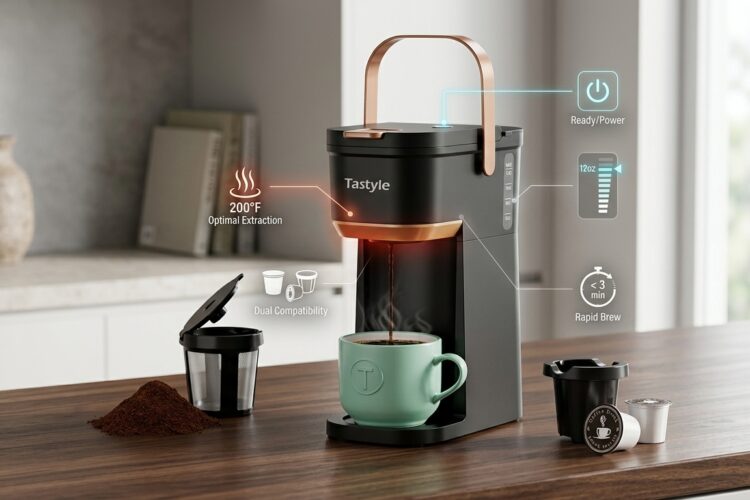
The Tastyle Mini Single Serve Coffee Maker represents one approach to solving this problem. As a countertop-friendly option that can also function as a portable solution, it bridges the gap between convenience and the ability to customize your brew. Understanding its capabilities, limitations, and practical applications can help you determine whether this type of device fits your lifestyle and coffee habits.
Understanding the Compact Coffee Maker Category
Before diving into the specifics of any single product, it’s helpful to understand what compact, single-serve coffee makers actually are and how they fit into the broader coffee-brewing landscape.
Single-serve coffee makers have become increasingly mainstream over the past two decades. The general concept involves brewing one cup (or a small number of cups) at a time, as opposed to traditional drip coffee makers that brew a full pot. This approach offers several inherent advantages: reduced waste of undrunk coffee, faster brewing times in many cases, and the ability to experiment with different beans or roasts without committing a full pot’s worth of coffee.
The “portable” or “mini” designation adds another layer. These devices are specifically engineered to be smaller, lighter, and often designed to work in environments where traditional kitchen infrastructure might be unavailable. They typically consume less counter space and can operate from standard electrical outlets (like standard 120V household power in North America), making them versatile for various settings.
Key Features and How They Function
Understanding what makes these devices work helps clarify their practical value and limitations.
Single-Serve Capability
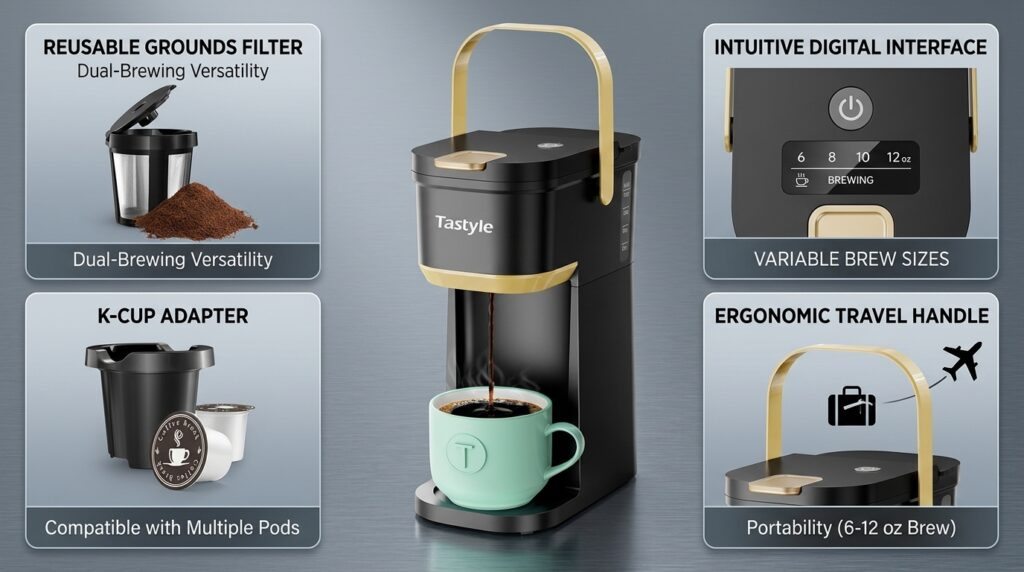
The single-serve functionality means the device brews anywhere from 6 to 12 ounces of coffee per cycle, depending on your specific needs and the machine’s capacity. This size range is intentional—six ounces is a standard small cup, while twelve ounces accommodates a larger mug. Some people use 6-ounce brew cycles for strong espresso-style coffee, while others prefer the 12-ounce option for a more diluted, lighter cup.
The advantage of this range is flexibility. If you’re the only coffee drinker in your space, you’re not making more than you’ll drink. If you have a guest, you can brew two sequential cups rather quickly. For families or shared spaces, this might not replace a traditional larger coffee maker, but it works well as a supplement or alternative in specific situations.
Dual Compatibility: K-Cups and Ground Coffee
One of the most practical features in modern single-serve coffee makers is the ability to work with both pre-packaged K-Cups and loose ground coffee. This dual compatibility matters because it addresses different user preferences and situations.
K-Cups—those small plastic pods containing pre-measured coffee—offer convenience and consistency. You insert a pod, press a button, and within minutes you have coffee. There’s no measuring, no cleanup of grounds, and each pod contains roughly the same amount of coffee in the same grind size. For people in busy situations or those who value simplicity, this is appealing.
Ground coffee brewing, conversely, offers flexibility. You can use beans from your favorite local roaster, adjust the grind size yourself, control the exact amount of coffee, and avoid single-use pods. For environmentally conscious coffee drinkers or those who prioritize customization, this matters significantly.
The ability to do both means you’re not locked into one approach. On a rushed weekday morning, a K-Cup might be convenient. On a weekend when you have more time, you might brew with fresh grounds from beans you’ve selected specifically for that occasion.
Portable Handle Design
The integrated handle isn’t purely aesthetic—it serves a practical function. A handle makes the device genuinely portable in the sense that you can comfortably carry it from one location to another. Whether moving between rooms, loading it into a vehicle for a camping trip, or transporting it to a dorm room at the start of a semester, the handle makes these movements easier and safer.
The handle also matters for the actual brewing process. Many compact coffee makers with handles can be lifted and moved even during brewing, which some users find convenient for reaching outlets or adjusting the device’s position.
120V Electrical Operation
The specification of 120V power operation (the standard household voltage in North America) means this device works with regular electrical outlets without requiring converters or special adapters. This is significant because it expands where you can actually use the device—any space with a standard outlet becomes viable.
For comparison, some portable coffee devices operate on batteries or require specific charging cables, which introduces additional limitations. A 120V device is simultaneously less portable in the absolute sense (you need an outlet) but more universally compatible within North American households, vehicles with power outlets, RVs with 120V hookups, and offices with standard electrical infrastructure.
Practical Applications and Usage Scenarios
The true value of any specialty kitchen device emerges when you consider the actual contexts where you’d use it.
Camping and Outdoor Recreation
Camping represents perhaps the quintessential use case for portable coffee makers. Many camping enthusiasts describe coffee as an essential component of the outdoor experience—it provides a familiar comfort in an unfamiliar environment. Traditional options have historically included instant coffee, percolators that go on camp stoves, or pour-over methods that work but require more active attention.
A compact electric coffee maker changes this equation. If your campsite has access to a generator or you’re camping in an RV with electrical hookups, you can brew coffee using familiar methods. The compact size means it doesn’t take up significant space in your vehicle or camping setup. The handle makes it easy to move from your tent to your picnic table.
It’s worth noting that this approach does depend on available electricity. Boondocking situations without power sources would require alternative methods. But for established campgrounds with electrical hookups—increasingly common in many regions—this becomes a viable option.
RV Travel and Vehicle-Based Living
RVs represent a different context where portable coffee makers excel. Many RVs have limited counter space, making a full-sized coffee maker impractical. A compact device can fit in a cabinet or small counter area. The 120V operation is particularly relevant here because most RVs either operate on 120V when plugged into shore power or have inverters that provide 120V from battery systems.
For people who travel in RVs for extended periods, maintaining certain daily comforts becomes psychologically important. Coffee is high on that list for many. A device that lets you maintain familiar brewing habits without consuming significant space or power resources is genuinely valuable.
Office and Workplace Environments
Not everyone has access to an office coffee setup, or you might work in a smaller workspace where shared brewing equipment is impractical. A personal compact coffee maker at your desk means you’re not dependent on communal break room machines, vending machine coffee, or making multiple trips to a nearby café.
In remote work environments—which have become increasingly common—having your own brewing capability eliminates a reason to leave your workspace. For people on specific diets or with particular coffee preferences, this personal setup ensures you get exactly what you want.
Dorm Rooms and Temporary Housing
College students and others in dorm situations operate under specific constraints. Space is limited, and many dorm contracts restrict what appliances are permitted. However, compact single-serve coffee makers are generally permitted in most dorm agreements because they’re smaller and use less power than full-sized machines.
For students who study long hours and rely on caffeine to maintain energy, a personal coffee maker offers convenience and saves money compared to frequent café purchases. The compact size means it doesn’t dominate limited desk or shelf space.
Home Use and Space-Limited Residences
Studio apartments, tiny homes, and other space-constrained living situations present their own challenges. A traditional 12-cup coffee maker requires counter space that many people simply don’t have. A compact machine solves this by providing single-serve brewing capability without the footprint of conventional equipment.
Even in larger homes, some people prefer having a backup brewing option in addition to their main coffee setup, or they might use a compact machine in a bedroom, office, or other room where they don’t want to install a larger machine.
Who Might Find This Useful
Different people value different things in coffee-making equipment. Understanding which user profiles typically benefit from compact coffee makers helps clarify whether this represents a good fit for your situation.
Active and Adventure-Oriented Individuals: People who camp, hike, travel in RVs, or otherwise spend significant time outside their primary residence benefit from portable solutions. If outdoor recreation and travel are central to your lifestyle, having brewing capability at your destination becomes practically valuable.
Solo Coffee Drinkers: Single-person households or situations where only one person regularly drinks coffee find single-serve machines more sensible than brewing full pots that go unfinished. This is particularly true for people with varying schedules or work patterns.
Remote and Mobile Workers: As work locations have diversified beyond traditional offices, people working from coffee shops, libraries, various rooms in their homes, or completely different locations find personal brewing solutions valuable. You maintain consistent access to the coffee you want without café dependencies.
People with Limited Space: Urban apartment dwellers, those in transitional housing, students, and anyone with constrained living spaces benefit from equipment that doesn’t demand significant counter or storage space.
Coffee Enthusiasts Focused on Customization: Paradoxically, some serious coffee lovers appreciate compact machines because they enable experimentation. You can brew small quantities of different beans or roasts without waste, allowing you to explore coffee varieties more economically.
Environmentally Conscious Consumers: People concerned about single-use pod waste can use the ground coffee brewing capability instead. The ability to avoid K-Cup plastic waste appeals to those making sustainability considerations.
People with Specific Dietary Needs: Those following particular diets, managing caffeine intake carefully, or preferring specific coffee preparations benefit from personal brewing control.
Important Considerations Before Purchase
Like any device, compact coffee makers come with certain practical and technical considerations worth understanding.
Electrical Requirements and Safety
These devices require access to a 120V outlet. Before assuming you can use one in a particular location, verify that appropriate electrical infrastructure exists. In older buildings, outlets might be spaced farther apart than you expect. RVs vary in their electrical capacity—some hookups operate at 30-amp service while others use 50-amp, and not all devices are compatible with all electrical systems.
Additionally, like any electrical appliance used with water, these devices demand proper care. Keep them away from water sources when not in use, ensure they’re on stable surfaces during operation, and follow the manufacturer’s safety guidelines. Electrical safety with water-based appliances is non-negotiable.
Water Quality Considerations
The water you use affects both the taste of your coffee and the machine’s longevity. Hard water—water with high mineral content—can cause mineral buildup inside the machine over time. In regions with particularly hard water, occasional descaling with appropriate solutions helps maintain performance and extends the machine’s operational life.
Some people in areas with poor tap water quality choose to use filtered or bottled water. This adds a small cost and requires keeping water on hand, but it can improve both the coffee taste and the machine’s condition.
Brewing Time Expectations
Compact electric coffee makers brew faster than many manual methods, but they’re not instantaneous. Expect a few minutes from button-press to finished coffee. This is typically faster than pour-over methods or French press brewing, but slower than instant coffee. If you’re in a situation where speed is absolutely critical, understanding these timelines matters.
Maintenance and Cleaning
Any device involving water and food products requires regular cleaning. The water reservoir, brew basket or pod holder, and any removable parts should be cleaned according to manufacturer instructions. Over time, mineral deposits can accumulate even in clean-looking water, necessitating periodic descaling.
Most compact machines have relatively simple cleaning procedures—many components are dishwasher safe—but it’s work that needs to happen regularly. Factor this into your decision-making.
Noise Level
Electric coffee makers generate noise during operation—water heating, pump activation if applicable, and any internal fans. If you’re planning to use this in a shared space like a dorm room or small RV where others might be sleeping, consider whether the noise level bothers you or others around you.
Heat Management
The device and the resulting coffee will be very hot during and immediately after brewing. Exercise appropriate caution, especially if the machine will be around children or in situations where accidental contact could occur.
How Portable Coffee Makers Compare to Other Brewing Methods
Various approaches to coffee brewing exist, each with distinct characteristics.
Versus Traditional Drip Coffee Makers
Full-sized drip coffee makers excel at brewing larger quantities and are often more cost-effective per cup of coffee. They work great if you consistently drink multiple cups or have a household of coffee drinkers. However, they demand counter space and aren’t portable. If you regularly throw out half-finished pots because people didn’t drink all the coffee, or you live alone and prefer fresh coffee multiple times daily in small quantities, a single-serve machine is more practical.
Versus Pour-Over Methods
Pour-over brewing—using cone filters and pouring hot water manually—produces excellent coffee and requires minimal equipment. It’s truly portable because it doesn’t need electricity. However, it demands active attention, requires a heat source for water, and takes more manual effort than pushing a button. For people who enjoy the ritual of manual brewing, pour-over is excellent. For those prioritizing convenience and speed, electric single-serve machines offer advantages.
Versus French Press
French press coffee has dedicated enthusiasts because of its rich flavor profile. It doesn’t require electricity and is relatively portable. However, it requires a heat source for water and takes time for steeping. It also produces sediment that some people dislike. A French press is excellent for camping where you have a camp stove and time to brew slowly. For quick brewing in a busy environment, a single-serve electric machine is more convenient.
Versus Instant Coffee
Instant coffee offers maximum speed and portability—just add hot water. Quality has improved significantly in recent years. However, many coffee drinkers find the flavor profile distinctly different from freshly brewed coffee. If you’re in a situation where fresh-brewed coffee is important to your experience, instant coffee doesn’t fully replace it, though it can serve as a backup option.
Versus Café Purchases
A relevant comparison for many people involves buying coffee from cafés versus brewing at home. Cafés offer convenience, environmental factors like ambiance, and social elements. However, regular café coffee purchases accumulate to significant expenses over time. A personal brewing device, combined with purchased beans, typically costs less per cup while offering customization and convenience for your primary location.
Frequently Asked Questions About Portable Single-Serve Coffee Makers
Can I use a regular coffee mug, or do I need specific containers?
Most single-serve machines have specific brew baskets or pod holders designed for their operation. Some have removable brew baskets that you can position over different cup sizes. You’ll want to verify the specific machine’s design, but generally, you have flexibility in what cup you use to catch the brewed coffee—you’re not locked into particular cups.
How long does brewing actually take?
Most electric single-serve machines brew a full cup in approximately 3-5 minutes from button press to finished coffee. This includes the time for the machine to heat water and perform the actual brewing. Actual time varies based on whether you’re using K-Cups or ground coffee, water temperature at startup, and the specific machine model.
Can I use any brand of K-Cup, or only specific ones?
Most machines compatible with K-Cups work with any standard K-Cup pod from any brand. Compatibility issues are rare with full-sized K-Cups, though some machines have specific requirements. It’s worth checking product specifications, but generally, K-Cup compatibility is quite broad.
What grind size should I use for ground coffee brewing?
Medium grind typically works well for most single-serve machines. Finer grinds can result in over-extraction and bitter coffee, while coarser grinds might brew too quickly and taste weak. If you’re using ground coffee, you might experiment slightly to find your preference, but starting with medium-grind coffee from a grocery store or roaster typically works well.
Is water quality really important?
Yes, it affects both coffee taste and machine longevity. In areas with hard water, using filtered water reduces mineral buildup and extends machine life. Even in softer water areas, good-quality water improves coffee taste. If your tap water tastes off, your coffee will too, so many people use filtered water.
Can I leave water in the reservoir, or do I need to empty it?
It’s generally better to empty the reservoir when you’re not using the machine regularly. Stagnant water can develop algae or bacteria, and minerals can accumulate if water sits for extended periods. If you’re using it daily, you can keep water in it, but for storage or if you won’t be using it for a while, empty it.
What if I want to brew larger quantities?
Single-serve machines are specifically designed for small quantities. If you need multiple cups, you’d brew sequentially—making one 12-ounce cup, then making another immediately after. This takes more time than a full-sized machine brewing for a group, but it’s an option if your situation occasionally requires larger quantities. However, if you regularly need multiple cups simultaneously, a traditional larger coffee maker might be more practical.
Are these machines durable, and how long do they typically last?
Quality varies by manufacturer and model, but properly maintained single-serve coffee makers typically last several years of regular use. Some people report having the same machine for 5+ years, while others have issues within a year or two. Factors include water quality, frequency of descaling, and how roughly the machine is handled.
Can I use these in RVs with all electrical systems?
Most RVs with standard 120V hookups can use these machines without issues. However, some RV electrical systems have limitations, and running a heating appliance might trigger breakers if other high-power devices are simultaneously running. If you’re uncertain about your RV’s electrical capacity, check the manual or consult with the RV manufacturer.
What’s the difference between K-Cup brewing and ground coffee brewing?
K-Cups are convenient, pre-measured, and consistent. Ground coffee offers customization and flexibility. K-Cup brewing is slightly faster and generates single-use pod waste. Ground coffee brewing gives you more control over the final flavor profile but requires more active involvement in the brewing process.
Conclusion
Portable single-serve coffee makers represent a practical solution for people whose lifestyles or living situations don’t align with traditional full-sized coffee equipment. Whether you’re traveling, living in limited space, or simply prefer brewing coffee in small quantities, this category of device addresses specific needs that other brewing methods don’t fully solve.
The Tastyle Mini Single Serve Coffee Maker exemplifies the general category—a compact device that works with both convenient K-Cups and customizable ground coffee, operates on standard household power, and fits into various environments where people spend their time.
As with any equipment purchase, the key is matching the device to your actual needs and usage patterns. If you’re frequently in situations where you want fresh coffee without access to traditional brewing setup, or if you value the convenience of single-serve brewing, this type of machine merits consideration. If you drink coffee mostly in one location with a full-sized machine already available, the addition might be unnecessary.
Understanding what these devices do, how they function, and what practical considerations exist helps you make an informed decision aligned with your actual coffee habits and lifestyle needs.