Introduction
The morning routine has evolved significantly over the past decade. Gone are the days when most people relied solely on full-pot coffee makers to get their caffeine fix. Today’s coffee drinker is often looking for something faster, more convenient, and tailored to their individual needs. Whether you’re someone who lives alone, travels frequently, or simply wants to avoid the waste of brewing an entire pot when you only need one cup, single-serve coffee makers have become a practical staple in many kitchens.
The market for these compact brewing devices has expanded considerably, offering a wide range of options at different price points and with varying features. Some emphasize portability, others prioritize speed, and many attempt to balance both. Understanding what these machines can and cannot do—and identifying which features matter most for your lifestyle—can make the difference between a convenient addition to your kitchen and an unused appliance gathering dust on a shelf.
The CHULUX Mini Single Serve Coffee Maker represents one particular approach to solving the single-cup brewing challenge. By focusing on compact design, quick heating capabilities, and compatibility with K-pod coffee pods, it attempts to address the needs of users who prioritize convenience and space efficiency. But before diving into specific product details, it’s worth understanding the broader context of how these machines work and what role they might play in your daily routine.
The Rise of Single Serve Brewing
Single-serve coffee makers emerged as a response to several modern lifestyle trends. The growth of remote work, increased travel, and smaller living spaces all contributed to the popularity of these devices. Unlike traditional drip coffee makers that assume multiple cups of coffee will be consumed, single-serve systems are designed around the premise that one person, one cup, one time—makes perfect sense.
These machines fall into a few general categories. The most common use proprietary pods, capsules, or cartridges that come pre-packaged with ground coffee. Another category uses reusable filters that you fill with your own grounds. Some machines offer both options, while others specialize in portability and are designed to work in transit or in spaces where a full-sized machine simply won’t fit.
The environmental conversation around single-serve coffee makers has also become part of the broader discussion. While convenient, these systems can generate significant waste if using disposable pods. However, many manufacturers now offer reusable pod alternatives, and some consumers have become more conscious about how their brewing choices impact their household waste stream.
Key Features of the CHULUX Mini
The CHULUX Mini Single Serve Coffee Maker brings several distinct characteristics to the table that define its functionality and appeal. Understanding these features in detail helps clarify what the machine is designed to do and how it compares to other options in the single-serve category.
Compact and Portable Design
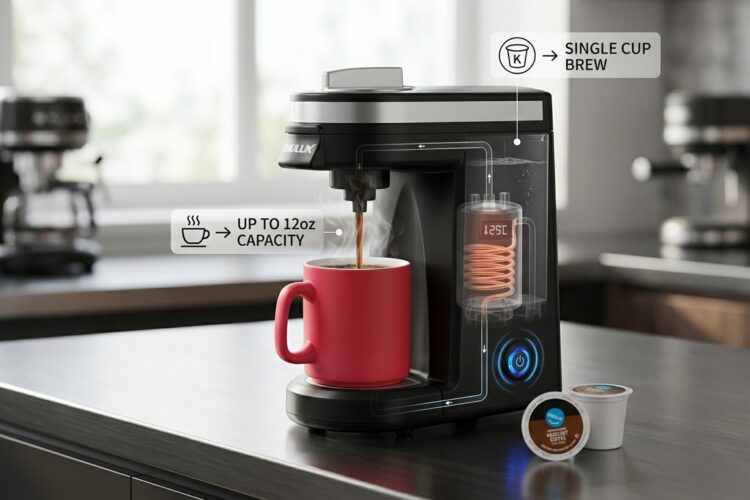
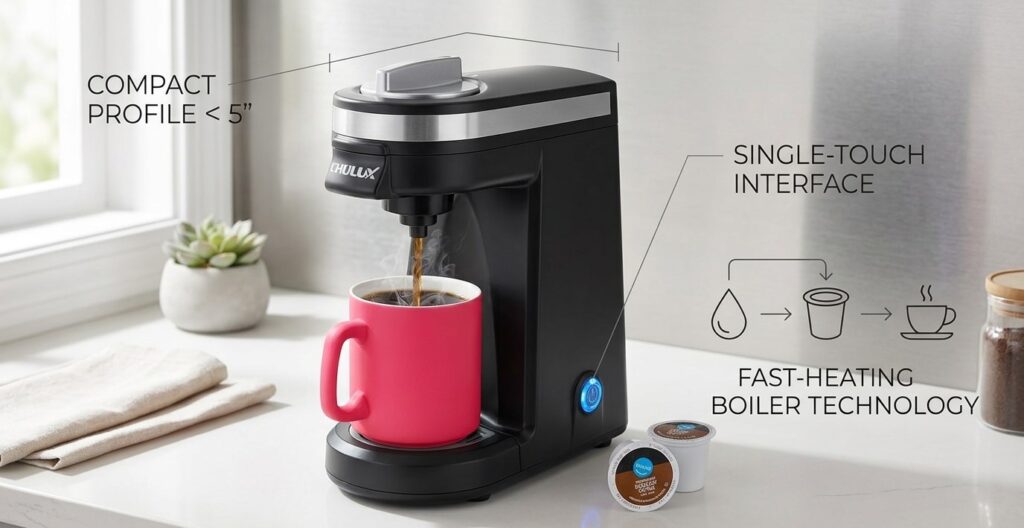
The most immediately apparent characteristic of this machine is its size. Described as both compact and portable, the CHULUX Mini doesn’t take up the footprint of conventional coffee makers. This makes it particularly suitable for apartments with limited counter space, office break rooms, dorm rooms, or anywhere square footage comes at a premium.
Portability extends beyond just physical size. A truly portable coffee maker needs to be light enough to move around without significant effort, durable enough to withstand occasional jostling, and simple enough to set up in different locations. The black finish mentioned in the product specifications suggests a design that’s meant to look understated and neutral, fitting into various kitchen aesthetics without demanding attention.
The compact form factor does involve trade-offs. A smaller machine means a smaller water reservoir, which affects how many cups you can brew before refilling. It also means less internal space for heating elements and brewing mechanisms. Manufacturers making compact single-serve machines need to engineer efficient systems that don’t sacrifice function for form.
K-Pod Compatibility
The machine’s designation as compatible with K pods places it squarely within the ecosystem established by Keurig and similar systems. K pods represent a standardized format that has become ubiquitous in the coffee market. This compatibility is significant because it means users have access to an enormous selection of coffee varieties, brands, and styles from numerous manufacturers.
The proliferation of K-pod options means you’re not locked into a single brand’s offering. Whether you prefer light roasts, dark roasts, flavored coffees, or even non-coffee beverages like tea or hot chocolate, the variety available in K-pod format is substantial. This ecosystem approach has been part of the K-pod system’s success—the machine becomes a platform for accessing a broad range of beverage options rather than a standalone device.
However, K-pod compatibility also carries the limitation that you’re dependent on pre-packaged pods. Some coffee enthusiasts prefer grinding their own beans fresh before each brewing, and K-pod systems don’t readily accommodate that workflow. Understanding whether pre-packaged convenience or fresh-ground customization matters more to you is relevant when considering any K-pod machine.
Brew Capacity Up to 12 Ounces
The specified capacity of up to 12 ounces represents a fairly standard cup size in the single-serve category. Twelve ounces is slightly less than a standard mug but adequate for a solid cup of coffee or tea. Some people prefer smaller, concentrated servings, while others like larger cups. If you consistently want more than 12 ounces, you might need to brew twice or consider whether this machine aligns with your preferences.
The “up to” language in the specification is worth noting. It suggests the machine can brew to that volume but doesn’t require you to use the full capacity every time. Different K-pods can be brewed at different volumes, and your personal preference for coffee strength and cup size can influence how much water you actually use.
Fast-Heating Boiler System
One of the more technically significant features is the fast-heating boiler system. In the context of single-serve machines, heating speed directly impacts the user experience. A machine that takes five minutes to heat before you can brew your first cup is less convenient than one that reaches brewing temperature in under a minute.
The engineering of heating systems in coffee makers involves balancing several considerations. Faster heating can be more energy-intensive, though modern systems have become more efficient. The heating element needs to be powerful enough to reach the right temperature quickly but controlled enough to prevent the machine from becoming too hot to handle or creating safety issues.
A fast-heating system is particularly relevant if you’re brewing multiple cups in succession or if you want your coffee ready quickly in the morning. It’s also valuable if your machine will spend extended periods powered off and you don’t want to wait a lengthy warm-up time before using it.
How This Type of Machine Fits Into Daily Life
Single-serve coffee makers serve different purposes in different contexts. Understanding the various ways people use these machines can help clarify whether this particular model fits your situation.
The Daily Home Brewer
For someone living alone or in a household where each person has different coffee preferences, a single-serve machine eliminates the need to compromise. One person might want a strong dark roast while another prefers a lighter, more delicate brew. Instead of negotiating whose preference the household coffee maker serves, everyone can have exactly what they want.
The minimal cleanup involved with single-serve brewing appeals to many people. There’s no large carafe to wash, no filter basket full of grounds to dispose of, and no leftover coffee sitting in a pot all morning. Each cup starts fresh. This can feel particularly valuable on busy mornings when efficiency matters or on lazy weekends when you simply don’t want to deal with cleanup.
The ability to brew just one cup also means less waste if you only drink one cup and don’t want coffee sitting around afterward. Traditional drip machines often create the implicit assumption that you’ll drink multiple cups; single-serve machines make one cup feel like a perfectly natural serving size.
The Office Setting
Office break rooms have become a common place to find single-serve brewers. Multiple people with different preferences can all make their ideal cup without anyone hogging the machine for five minutes while a full pot brews. Compact machines are particularly valuable in office settings where counter space is limited and numerous people need to access the equipment.
From an office management perspective, pre-packaged pods also minimize mess and user error. Someone might forget to add filter paper or grounds to a traditional machine, or make a mess cleaning it. K pods are self-contained, reducing the chance of something going wrong.
Travel and Mobility
A portable single-serve machine opens up possibilities for people who travel frequently or spend extended time in temporary living situations. Whether you’re staying in an Airbnb for a few weeks, spending time at a vacation cabin, or traveling for work, a compact coffee maker can ensure you have access to the exact brewing experience you prefer.
Some travelers bring their machines along. Others use them in temporary situations where a full-sized machine doesn’t make sense. A hotel room or a temporary corporate housing situation might have coffee available, but it might not match your preferences. Having your own portable machine provides control and consistency.
Supplementary Brewing
In some households, a single-serve machine serves as a secondary option rather than the primary coffee maker. Someone might have a pour-over setup, a French press, or a traditional drip machine they use most days, but keep a compact single-serve brewer available for convenience when there’s no time to use their preferred method or when someone else in the house wants coffee while the main machine is already in use.
This supplementary role means the machine doesn’t need to be sophisticated or feature-rich—it just needs to reliably deliver a quick cup when needed. The compact size makes it easy to keep stored until needed without significantly impacting kitchen space allocation.
Who Might Find This Machine Suitable
Different people have different priorities when it comes to coffee brewing equipment. Certain user profiles are more likely to find a compact single-serve machine valuable.
Space-Conscious Individuals
Anyone living in a studio apartment, small house, shared housing, or any situation where counter space is at a premium will appreciate the minimal footprint. If you’re choosing between a full-sized coffee maker and a single-serve machine based on space, the compact option obviously wins that comparison.
People who value an uncluttered kitchen aesthetic also tend to prefer smaller appliances. A tiny black machine takes up far less visual real estate than a large traditional brewer, which can matter if your kitchen environment influences your sense of calm and order.
Solo Dwellers and Single-Cup Drinkers
If you’re the only person drinking coffee in your household, or if you only drink one cup, a single-serve machine makes logical sense. You avoid the waste inherent in brewing a full pot when one cup will suffice. Over time, this can translate to less coffee waste and potentially some cost savings, depending on how your personal consumption patterns work.
People with Diverse Beverage Preferences
Households where different people want different things benefit from single-serve brewing. If one person wants dark roast coffee, another wants herbal tea, and someone else wants a flavored beverage, a K-pod machine makes accommodating everyone simple. Each person gets exactly what they want without compromise.
Those Who Prioritize Convenience
If your morning routine is rushed, or if you value the ability to make a cup and get out the door quickly, the appeal of a fast-heating, minimal-setup machine is clear. The combination of speed, simplicity, and minimal cleanup creates a seamless experience for convenience-focused people.
Frequent Travelers
People who travel for work, seasonal workers, or anyone who spends substantial time in temporary living situations can benefit from bringing their own portable brewing solution. Knowing you can make your preferred coffee anywhere removes one variable from an already-changing living situation.
Office Environments
Office managers considering equipment for break rooms, or individuals who want to keep a personal brewer at their desk, find single-serve machines practical. They’re efficient with space, user-friendly enough that minimal training or instructions are needed, and they reduce the likelihood of someone leaving a mess in the break room.
Important Considerations Before Deciding
While single-serve machines offer genuine convenience, there are aspects worth carefully considering before purchasing.
The K-Pod Ecosystem Reality
If you choose a K-pod compatible machine, you’re committing to using K-pods or compatible alternatives. While the variety is substantial, and prices have become competitive, the per-serving cost of pods can exceed the cost of buying whole beans and grinding them yourself. Over years of use, this difference can accumulate.
Additionally, the environmental impact of disposable pods matters to some people. While reusable pod options exist, they require you to fill them with grounds and clean them after use—which somewhat undermines the convenience factor that makes pre-packaged pods appealing in the first place.
Water Quality and Maintenance
Single-serve machines, like all coffee makers, are affected by water quality and mineral content. Hard water can lead to mineral buildup (scaling) inside the machine over time, which can affect performance and lifespan. Most machine manufacturers recommend descaling periodically, and some include descaling solution or instructions.
The compact size of a single-serve machine means less space for water to flow through and potentially more noticeable impact from scaling. Regular maintenance becomes more important. Some people find this routine maintenance an acceptable trade-off for convenience; others view it as an annoying chore.
Cup Size Limitations
The 12-ounce capacity specifies a relatively standard cup size, but if your normal coffee consumption is significantly larger or smaller, this might not be ideal. Some people prefer 16-ounce or larger cups; others like 6-8 ounce concentrated servings. Your personal cup-size preference is worth honestly assessing before committing to a machine with a specific capacity.
Noise and Sound Considerations
Compact machines with fast-heating systems can sometimes be noisier than expected. If you’re brewing in an office, shared housing, or anywhere else where noise matters, it’s worth considering whether you’re comfortable with the sound level. Some people don’t mind minor noise; others find it intrusive.
Initial Water Fill
Like all single-serve machines, the CHULUX Mini requires water to be added to start brewing. If you want truly hands-off operation with a large water reservoir, a traditional drip maker with a permanent water reservoir offers an advantage. You’ll need to refill the machine for each brew, or at minimum regularly throughout the day.
Brew Quality Expectations
Single-serve machines are convenient tools, but they’re not professional-level espresso machines or pour-over setups in terms of technical control. You can’t adjust grind size (it’s pre-set in the pod), water temperature (it’s controlled by the machine), or extraction time (it’s programmed). If you’re particular about the technical aspects of brewing and want maximum control, a single-serve machine might feel limiting.
Comparing Single Serve Brewing Approaches
Understanding how different single-serve technologies compare provides helpful context for evaluating any specific machine.
K-Pod Machines vs. Pod-Free Machines
K-pod machines excel at convenience and variety but involve pre-packaged pods. Pod-free single-serve machines—which use a built-in filter basket that you fill with your own grounds—offer more customization and potentially lower per-cup costs. The trade-off is slightly more preparation and cleanup since you’re filling the filter and disposing of used grounds yourself.
Neither approach is objectively better; they serve different priorities. Someone who values maximum convenience will prefer K-pods. Someone who enjoys freshly ground coffee and wants to minimize waste might prefer a pod-free system.
Compact vs. Full-Sized Single Serve
A compact machine sacrifices some capacity and potentially some features for the benefit of taking up less space. A full-sized single-serve machine might offer a larger water reservoir, more brewing options, and additional features but occupies significantly more counter space. Your available space and tolerance for appliance size determines which makes sense.
Single Serve vs. Traditional Drip Makers
Traditional drip machines brew multiple cups at once, which is more economical if you drink several cups or if multiple people will consume coffee from the same pot. Single-serve machines make sense when one cup at a time is actually your normal pattern. Comparing these based on cost per serving requires honestly assessing whether you actually drink that full pot or if it sits around afterward.
Manual Brewing Methods vs. Electric Machines
Pour-over, French press, and other manual methods offer more control and require no electricity but demand more active participation. Electric single-serve machines trade some control for convenience. Again, this comes down to personal priorities—someone might prefer the ritualistic nature of manual brewing despite the slower speed.
Practical Usage Scenarios and Tips
Understanding how to maximize the value of a single-serve machine involves thinking through actual usage patterns and best practices.
Optimizing Morning Routines
If speed is the goal, everything works best when you’ve already made your decisions the night before. Choosing which K-pod you want, placing the machine on the counter and plugged in, and preparing your cup saves precious seconds in the morning. Some people set up their machine before bed specifically to minimize morning friction.
Brewing for Different Preferences
The variety of available K-pods means you can easily offer guests their preference without effort. Someone visits and prefers tea? Grab the herbal tea pod. They want a lighter roast? Grab a medium roast pod. This flexibility can make hospitality simpler and more personal.
Caring for the Machine
Following the manufacturer’s guidance on descaling and maintenance preserves the machine’s lifespan and performance. This typically involves running a descaling solution through the machine periodically—usually monthly to quarterly depending on water hardness and usage frequency. Taking this seriously prevents slow degradation in brewing speed or quality.
Managing Water Temperature and Brew Time
While you can’t adjust these settings on a single-serve machine, understanding that different K-pods might brew for slightly different amounts of time helps set expectations. A pod marked for 8 ounces will brew faster than one marked for 12 ounces, and flavor intensity might vary based on the pod selection.
Experimenting with Pod Variety
Part of the appeal of K-pod machines is access to numerous brands and styles without commitment. Trying different pods occasionally keeps the experience fresh and helps you discover preferences you might not have expected.
Frequently Asked Questions
Prospective buyers often have similar questions about single-serve coffee makers. Addressing common inquiries provides clarity.
How Much Space Does the Machine Actually Need?
The compact design means this machine requires significantly less space than a traditional drip maker. However, it still needs access to water and a place to position a cup. You’ll want a spot on the counter or table, access to an electrical outlet, and typically a small area nearby where water splash won’t cause problems. Exact dimensions vary, but generally speaking, imagine the footprint of a toaster and you’ll have a sense of the space requirement.
What Makes K-Pods Different from Other Pod Types?
K-pods are the standardized format created by Keurig and have become the most common format in the market. This standardization means compatibility across numerous machine brands and access to the widest selection of beverages. Other pod types exist, but K-pods dominate the market, making machines compatible with them more versatile.
Can You Use Reusable Pods with These Machines?
Many K-pod compatible machines work with reusable pod alternatives that you fill with your own grounds. This reduces waste and can lower per-serving costs. However, reusable pods require filling and cleaning, which eliminates some of the convenience factor. Whether this trade-off makes sense depends on your priorities.
How Often Does the Machine Need Descaling?
Descaling frequency depends on water hardness. Soft water might require descaling quarterly, while hard water might require it monthly or more frequently. The machine might indicate when descaling is needed, or you might notice that brewing takes longer, which often signals mineral buildup. Following manufacturer recommendations preserves performance.
What’s the Learning Curve?
Minimal. Most people can brew their first cup without reading instructions. Add water, insert a pod, press a button, and wait. The simplicity is part of the appeal. More advanced questions—like troubleshooting or maintenance—might require consulting instructions, but basic operation is intuitive.
Does Portability Mean It’s Battery Powered?
Not necessarily. The machine is portable in that it’s small and light, but it still requires an electrical outlet. True cordless, battery-powered coffee makers exist, but they’re a different category altogether. If you need fully cordless brewing, you’d need to verify that a specific model offers that capability.
How Long Does Brewing Actually Take?
From powering on to having a cup ready typically takes a few minutes, depending on the fast-heating system’s performance. The exact time varies by machine, but the general promise of single-serve brewers is “faster than traditional methods.” If you’re comparing to letting a full pot brew, single-serve is usually quicker. If you’re comparing to pour-over or French press, the difference might be minimal.
What’s the Actual Cost of Brewing?
This depends primarily on K-pod pricing, which varies by brand and variety. Premium pods might cost more than budget options. Comparing the per-serving cost of pods to traditional coffee requires calculating how much coffee you’d use and what kind you’d buy. For some people, pods are more economical; for others, traditional methods are cheaper.
Does the Machine Have a Warming Plate?
This varies by specific model. Some single-serve machines keep the cup hot on a warming plate after brewing; others don’t. If keeping your coffee warm throughout your morning is important, clarifying whether a specific model offers this feature matters.
What If You Want to Brew Larger Volumes?
If you regularly want more than 12 ounces, you’d need to brew twice. Some people find this acceptable; others find it inconvenient. This is a genuine limitation to honestly assess based on your actual consumption patterns.
Conclusion
Single-serve coffee machines occupy a specific niche in the kitchen appliance world. They’re not universally better than traditional methods—they’re simply a different approach optimized for particular situations and preferences.
A compact single-serve machine like the CHULUX Mini appeals to people who value convenience, space efficiency, and the ability to make exactly what they want without compromise. The combination of K-pod compatibility, fast heating, and small footprint addresses real needs for certain users. However, the system involves trade-offs: reliance on pre-packaged pods, regular maintenance requirements, and specific limitations around brew volume and customization.
Whether this machine is right for you depends on your lifestyle, available space, coffee consumption patterns, and what aspects of the brewing experience matter most to you. If you live alone, travel frequently, value convenience over cost savings, and have limited counter space, this type of machine could be genuinely valuable. If you brew large volumes, enjoy fresh-ground coffee customization, or want the lowest possible per-cup cost, you might find limitations frustrating.
The best decision comes from honestly assessing your actual needs rather than imagining an idealized version of your coffee habits. Think about your real mornings, your actual cup size preferences, and whether convenience genuinely matters more to you than other factors.