Introduction
The morning ritual of brewing coffee has evolved considerably over the past two decades. What once required standing over a drip machine, measuring grounds, and waiting for a full pot has transformed into something far more convenient and personalized. Single-serve coffee makers have become a fixture in many households, offices, and break rooms across North America, offering a different approach to coffee preparation that prioritizes speed, simplicity, and individual customization.
The Keurig K-Express represents one approach to single-serve brewing technology. Understanding what single-serve coffee makers do, how they function, and whether this particular style of appliance fits your lifestyle requires looking beyond marketing claims and examining the practical realities of this brewing method.
This article explores single-serve coffee making in general, examines the specific capabilities and design considerations of the K-Express model, and helps you understand whether this category of appliance aligns with your coffee drinking habits and household needs.
What Are Single-Serve Coffee Makers and How Do They Work?
Before diving into the specifics of any particular model, it’s worth understanding the basic mechanics of single-serve brewing systems. Unlike traditional drip coffee makers that brew an entire pot, single-serve systems brew one cup at a time, typically ranging from 6 to 12 ounces of liquid per brew cycle.
Most single-serve brewers work through a similar fundamental process. Water is added to a reservoir, heated to an appropriate temperature, and then forced through a pre-packaged pod or capsule containing ground coffee. The result is a brewed cup of coffee produced in just a few minutes, without the need for filters, measuring spoons, or cleanup of grounds afterward.
The K-Express follows this standard single-serve approach. The system relies on pod-based brewing, which means the coffee grounds are already measured and contained within individual packages. This eliminates several steps that traditional brewing requires, though it also establishes a specific supply chain for continued use of the machine.
Key Features of the K-Express Model
The K-Express incorporates several design elements that define its approach to single-serve coffee making. Understanding these features provides insight into how the machine operates and what kind of user experience it delivers.
Brew Size Options
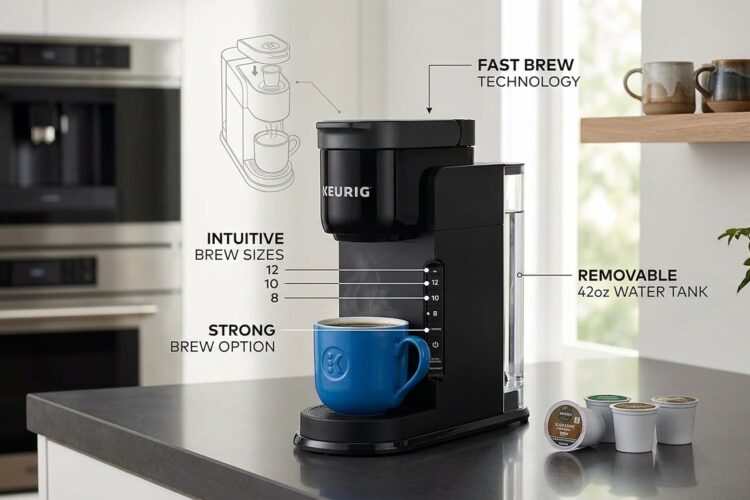
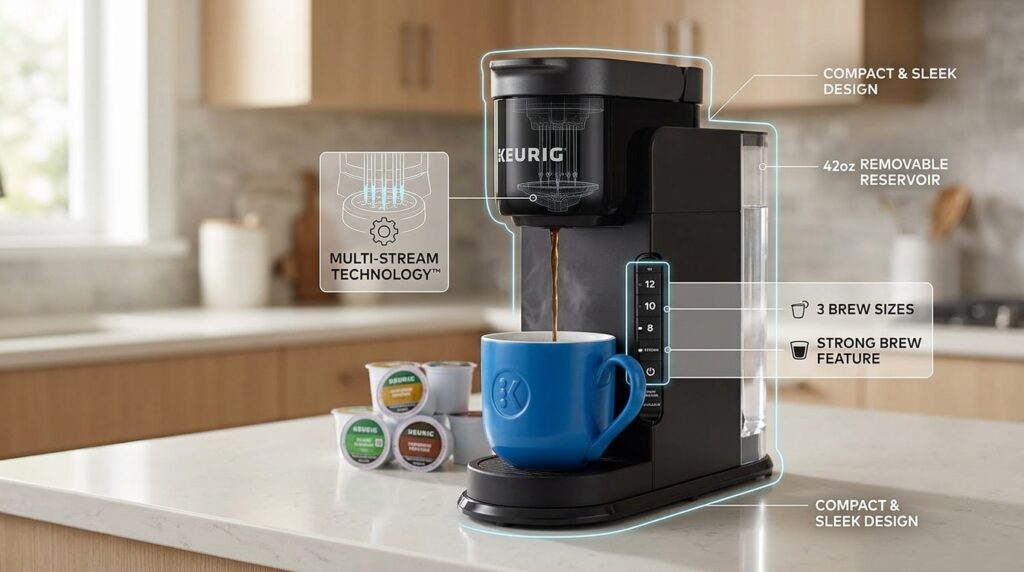
One notable aspect of the K-Express is its inclusion of multiple brew size settings. The machine offers three different brew sizes, which allows users to customize cup volume according to their preference or available cup size. This flexibility means you’re not locked into a single output volume—you can brew a smaller portion for an espresso-style shot or a larger volume for a full mug.
This feature addresses one of the practical considerations in single-serve brewing. Some users prefer smaller, more concentrated cups, while others want a fuller mug similar to what a traditional coffee maker would produce. The three-size option provides middle ground without requiring you to brew extra coffee you don’t intend to drink.
Strong Brew Feature
Many coffee drinkers recognize that brew strength is a personal preference. Some find standard coffee too mild for their taste, while others prefer a gentler cup. The K-Express includes a dedicated strong button that adjusts the brewing process to produce a more concentrated cup.
This feature functions by altering the water-to-coffee ratio or adjusting the contact time between water and grounds, depending on the specific design implementation. It’s a straightforward addition that acknowledges that people have different taste preferences without requiring them to purchase multiple machines or experiment with different pod types.
Removable Reservoir Design
The K-Express features a 42-ounce removable water reservoir. This capacity allows you to fill the machine once and brew several cups before needing to refill—typically enough for two to four brewing cycles depending on your selected brew size.
A removable reservoir offers practical advantages. It’s easier to fill and clean than fixed reservoirs that are built into the machine structure. You can fill it at your sink without moving the entire appliance, and it simplifies any water maintenance the machine might require.
The specific capacity means you’re not refilling after every single brew, which can be convenient during morning routines when multiple people might be making coffee in succession. However, it also means the machine requires periodic refilling if you’re a heavy coffee drinker or the machine sits in a low-traffic area for several days.
Compact Footprint
The K-Express is designed to occupy relatively minimal counter space compared to many alternative coffee brewing systems. For apartments, small kitchens, office desks, or dorm rooms where space is at a premium, this compact size can be a meaningful advantage.
Smaller appliances generally mean they integrate more easily into existing kitchen setups and create less visual clutter on counter surfaces.
How Single-Serve Systems Fit Into Your Routine
Understanding whether a single-serve coffee maker suits your situation requires honestly assessing how you currently use coffee and how a different brewing method might change that routine.
Morning Preparation Scenarios
Single-serve brewers excel in scenarios where individuals in a household have different preferences or schedules. If you and your household members have varying coffee tastes—one person prefers strong black coffee while another wants a mild brew with cream—a single-serve machine eliminates the need to coordinate a pot that pleases everyone.
The speed of single-serve brewing also matters in busy mornings. If your current routine involves waiting for a pot to brew, or if you frequently forget about coffee sitting on a warmer, the faster individual brewing cycle might streamline your morning.
Conversely, if your household typically gathers for breakfast together and everyone drinks coffee at the same time, brewing a traditional pot might be more efficient than brewing multiple individual cups.
Work and Office Applications
Many offices have adopted single-serve brewing systems for employee break rooms. In these settings, the ability for individuals to brew exactly what they want without coordinating with coworkers or leaving a pot to go stale addresses real practical issues.
If you’re considering a single-serve machine for a home office, the logic is similar. One person can brew as needed without production of excess coffee.
Varied Consumption Patterns
Some households have erratic coffee consumption. Perhaps one person drinks coffee daily while another drinks it occasionally. Perhaps consumption is higher on weekdays but drops on weekends. In these situations, single-serve brewing prevents waste from unused coffee sitting in a pot.
Who Might Find Single-Serve Brewing Suitable
Several household and lifestyle situations align well with single-serve coffee preparation.
Individual households or people living alone often benefit from single-serve machines. There’s no scenario where excess coffee is made, and the brewing speed accommodates various schedules without leaving stale coffee.
Households with mixed coffee preferences gain the ability for each person to make exactly what they prefer. One person can make strong coffee while another makes a milder cup, without compromise or complex brewing arrangements.
Workplace environments, whether home offices or shared break rooms, benefit from the individual customization and lack of coordination required.
People with limited kitchen space appreciate the compact footprint that doesn’t demand significant real estate on already crowded counters.
Individuals who travel or maintain multiple residences sometimes use single-serve brewers as a space-efficient solution in secondary locations.
People sensitive to coffee freshness who recognize that coffee begins degrading shortly after brewing may prefer brewing individual cups to minimize waste from cooling pots.
Important Considerations and Potential Drawbacks
Honest evaluation of single-serve brewing requires acknowledging where this approach has limitations or creates trade-offs compared to alternatives.
Pod-Based Supply Chain
Single-serve brewing depends on a consistent supply of compatible pods. This creates an ongoing purchasing requirement and ties you to whatever compatibility standards the manufacturer maintains. If a particular brand discontinues pod production for a machine model, your ability to use the appliance becomes limited.
The cost-per-cup of single-serve brewing is typically higher than brewing a full pot of coffee with traditional methods. Pods involve more packaging, more individual manufacturing processes, and generally higher price per ounce of coffee compared to bulk ground or whole bean coffee.
Environmental Considerations
Pod packaging creates waste material that must be disposed of after each brew. While some pods are compostable or recyclable, many end up in landfills. For environmentally conscious consumers, this represents a meaningful trade-off compared to brewing methods that generate less packaging waste.
Some manufacturers have addressed this with refillable pod systems that allow you to fill your own grounds, though these require additional effort and negate some of the convenience advantage.
Cup Quality Variability
Single-serve brewing necessarily involves less direct control over brewing parameters compared to manual methods. You can’t adjust water temperature, contact time, or grind size in any meaningful way. The quality and consistency of your coffee depends heavily on the quality of the pods you purchase.
Poor quality pods produce poor quality coffee. Premium pods produce better results but cost more. The machine itself is simply the delivery mechanism—it’s not solving quality issues if your pods are subpar.
Heat-Up Time
While single-serve brewers are faster than waiting for a full pot, they’re not instantaneous. Most models require a few moments to heat water and complete a brewing cycle. If you measure coffee consumption in seconds rather than minutes, you might find single-serve brewing still feels like waiting.
Learning Curve for Optimization
Achieving consistent, quality results sometimes requires experimentation with different pod brands, brew size selections, and button options. If you prefer appliances that work intuitively without trial and error, single-serve brewing might feel more fussy than expected.
Comparing Single-Serve Brewing to Alternative Methods
Understanding the K-Express in a broader context requires considering how single-serve brewing compares to other common coffee preparation approaches.
Traditional Drip Coffee Makers
Drip machines brew a full pot, typically 8-12 cups worth of coffee. The initial brewing time is similar to single-serve systems, but once ready, you have a pot available without additional wait times. Drip makers generally cost less upfront and produce lower per-cup costs. However, they produce excess coffee if you live alone or drink inconsistently, and coffee quality degrades as it sits on a warmer.
Pour-Over and Manual Methods
Manual brewing methods like pour-over offer direct control over brewing variables and typically lower ongoing costs per cup. These methods require more attention and skill to achieve consistent results, and they’re slower than automatic machines. For people who enjoy the ritual and hands-on aspect of coffee preparation, these methods offer satisfaction that automatic machines don’t provide. For people who want speed and simplicity, manual methods require more engagement than desired.
Espresso Machines
True espresso machines produce concentrated coffee shots through pressure-driven extraction. They require skill to operate well, involve significant upfront investment, and demand regular maintenance and cleaning. However, they enable a broader range of coffee drinks (lattes, cappuccinos, americanos) compared to single-serve pod systems.
French Press and Other Immersion Methods
French press brewing involves steeping grounds in hot water for several minutes. This method produces rich coffee at low cost, but requires more time, produces grounds that need disposal, and involves glassware that needs cleaning.
Coffee Subscription Services
Some people order freshly roasted beans on subscription, grind them at home, and brew using their preferred method. This approach offers exceptional freshness and quality but requires more engagement and planning than single-serve convenience.
Each method has genuine advantages in different situations. Single-serve systems excel at convenience and individual customization but trade off per-cup cost and environmental impact.
Practical Usage and Maintenance
Understanding how the K-Express functions in daily use helps set realistic expectations about ownership.
Daily Operation
The basic operation is straightforward: fill the reservoir with water, insert a compatible pod into the brewing chamber, select your desired brew size and strength settings, and initiate the brew cycle. Within a few minutes, your coffee is ready.
Unlike traditional drip machines, there’s no coffee filter to purchase and replace, no grounds to dispose of (beyond the pod), and no pot to wash. The pod holds all grounds and is disposed of after brewing.
Water Quality and Maintenance
Water quality affects both coffee taste and machine performance. Hard water can lead to mineral buildup inside the machine over time, potentially reducing efficiency and affecting flavor. Many single-serve machine owners in areas with hard water periodically descale their machines using vinegar or descaling solutions to prevent mineral accumulation.
Reservoir Care
The removable reservoir should be cleaned periodically. Most can be hand-washed, though you should verify specific care instructions for your model. A clean reservoir prevents water contamination and helps ensure the fresh taste of your brewed coffee.
Compatibility and Pod Selection
The success of your single-serve brewing experience depends significantly on pod selection. Different manufacturers make pods compatible with Keurig systems, and these vary in quality, flavor, and price. Exploring options helps you find products that match your taste preferences and budget constraints.
Frequently Asked Questions
How long do single-serve machines typically last?
Quality single-serve machines generally last 3-5 years with normal use, though some machines function longer. Lifespan depends on water quality in your area, frequency of use, and how well the machine is maintained. Hard water areas may experience shorter lifespans due to mineral buildup.
Can you use reusable pods with single-serve machines?
Some manufacturers make reusable pod systems that work with certain machines, allowing you to fill your own ground coffee. These reduce ongoing pod expenses but require cleaning after each use and negate some convenience benefits. Compatibility varies by machine model.
Is the machine loud?
Single-serve brewers make noise during operation—water heating, pumping, and the brewing cycle itself produce sound. They’re not silent, but most people wouldn’t describe them as objectionably loud. If you brew during early mornings when others are sleeping, the noise level might be worth considering.
Does the machine brew coffee quickly?
Most single-serve systems produce coffee in 1-2 minutes from when you initiate the brew cycle. This doesn’t include time for the machine to heat if it’s been idle, which might add an additional minute depending on the model. It’s faster than traditional drip machines making a full pot, but not instantaneous.
What happens if I run out of pods?
Without compatible pods, the machine can’t produce coffee. This is both advantage (simplicity and portability) and disadvantage (supply chain dependency). Planning ahead to maintain pod inventory prevents situations where you want coffee but can’t brew any.
Can these machines make other beverages besides coffee?
Single-serve pod systems are designed for coffee and similar hot beverages where brewing consistency matters. Some people use them for tea by selecting water-only options, though this isn’t optimal. They’re not suitable for beverages requiring different preparation methods.
How much water should I use?
The machine handles water measurement through its preset brew sizes. You simply select your desired size and the machine dispenses the appropriate amount. This removes guesswork from water measurement.
Are there any safety considerations?
Single-serve brewers heat water to temperatures suitable for brewing, which means the water and dispenser are hot during and shortly after brewing. Standard precautions apply—avoid touching hot surfaces and keep hands clear of the dispensing area.
Making Your Decision
Determining whether a single-serve brewer aligns with your needs requires honest assessment of your actual coffee consumption, preferences, and living situation. These machines excel in specific scenarios but aren’t universally the best solution for everyone.
Consider single-serve brewing if you live alone, want individual customization, have limited counter space, or prefer maximum convenience without involvement in the brewing process. Be mindful of the pod supply requirements, higher per-cup costs compared to traditional brewing, and environmental impact of pod packaging.
If you brew coffee for multiple people simultaneously, prioritize environmental impact, or enjoy the hands-on aspect of coffee preparation, you might find traditional brewing methods or manual methods more suitable.
Conclusion
The Keurig K-Express represents a practical appliance for people seeking convenient, individually-customized coffee brewing. Its multiple brew sizes, strong brew option, and compact design address real needs for certain households and work environments. Like any appliance category, single-serve coffee makers involve trade-offs—convenience and customization in exchange for ongoing pod purchasing requirements and higher per-cup costs.
The decision to invest in any coffee brewing system should reflect your actual daily habits, preferences, and values rather than marketing claims or what others recommend. Understanding both the capabilities and limitations of single-serve brewing helps you make a choice that genuinely serves your lifestyle.